
States are mandated to develop and implement 'heat HAPs' for prevention of heat-induced diseases. But most do not go beyond standard advisory on heat prevention.
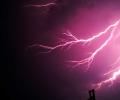
Lightning claims more lives in India annually than any other extreme weather event. Between April and July this year alone, 1,621 people died due to lightning strikes.

The mercury at the Safdarjung Observatory is expected to breach the 43-degree mark on Thursday and touch 44 degrees Celsius by Friday, according to the India meteorological department.

Union Home Minister Amit Shah on Wednesday said the Centre had sent multiple advance warnings to the Kerala government about possible floods and landslides in the state, starting as early as July 23, and nine National Disaster Response Force (NDRF) teams were rushed to the state the same day.

The India Meteorological Department has issued an 'orange' alert.

The Met office had said Monday that significantly higher-than-normal temperatures may have an adverse impact on wheat and other crops.

IMD data shows in the 24 hours between September 1 and 2, Haryana received 806 per cent more rainfall than normal, Punjab 759 per cent, Himachal Pradesh 510 per cent, Delhi 740 per cent, Chandigarh a staggering 1,638 per cent, and Rajasthan 193 per cent.

The India meteorological department has issued a yellow alert, warning of a fresh heatwave spell in Delhi which may see temperatures soaring to 44 degrees Celsius by Wednesday.

The mercury breached the 46-degree Celsius mark in several places such as Allahabad (46.8 degrees Celsius) and Jhansi (46.2 degrees Celsius) in Uttar Pradesh; Sports Complex (46.4 degrees Celsius) in Delhi; Ganganagar (46.4 degrees Celsius) in Rajasthan; Nowgong (46.2 degrees Celsius) in Madhya Pradesh; and Maharashtra's Chandrapur (46.4 degrees Celsius).

Mercury hovered around 40 degrees Celsius in large parts of the country on Monday as the Indian meteorological department predicted heat wave conditions in parts of east India over the next four days and the northwest region over the next two days.

The Met office has issued a "red" warning for Delhi, Haryana, Punjab and west Rajasthan, stressing the need for "extreme care for vulnerable people".

Lakhs of voters will have to bear the searing heat when they step out to exercise their franchise in the second phase of the Lok Sabha elections on Friday.

Some India states are likely to record a significantly higher number of heatwave days, according to the national weather body.

The India Meteorological Department, which had issued a red colour-coded alert for north India for May 25-26 when the prevailing heatwave conditions are expected to peak, said dust and thunderstorms are likely to bring some relief on May 29-30.

India is set to experience extreme heat during the April to June period, with the central and western peninsular parts expected to face the worst impact, the IMD said on Monday as the country prepares for seven-phase general elections from April 19.

The weather department also said the national capital recorded only two rainy days this May, the lowest in 10 years.

Parts of south, east and northeast India are expected to get some relief from the blistering heat, with the onset of monsoon expected to take place over Kerala on Saturday.

Scenes from around the world as heatwaves engulf different parts of the globe.

Senior IMD scientist R K Jenamani said the monsoon covered south and central Arabian Sea, entire Kerala, parts of Karnataka and Tamil Nadu between May 31 and June 7.
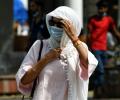
As Kerala battles severe heat, the meteorological department has issued a maximum temperature warning for 12 districts for the upcoming five days.

Heavy rain in the first week of July compensated for the shortfall but caused flooding in many northeastern states.

The mercury soared to 46.2 degrees Celsius at Najafgarh, making it the hottest place in the capital.

Voting for the second phase of Lok Sabha polls will be held on Friday for 88 seats in 13 states with Congress leader Rahul Gandhi seeking a second-straight term from Wayanad in Kerala.

The experts said that climate change is not only raising temperatures and making India's heatwaves hotter, but also changing weather patterns that further drive dangerous weather extremes.

The maximum temperature at the Safdarjung Observatory, Delhi's base station, rose to 42.5 degrees Celsius.
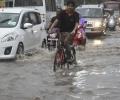
The southwest monsoon over the country is likely to be normal in July, the India Meteorological Department (IMD) said on Thursday in its forecast for the month.

The national capital, parts of which reeled under heatwave conditions for the past few days, had some relief on Wednesday with strong winds and partly cloudy skies witnessed during the day.

The independent group of scientists and communicators previously said that winters are quickly transitioning into summer-like conditions in north India, shortening the spring season.

Apart from the human body, human food will bear direct repercussions. From staples such as wheat, to coffee, dairy, and even the great Hilsa face the threat of reduced supply due to the extreme heat.

Intense heat swept through east India and parts of the southern peninsular region on Thursday, testing power grids and prompting the Kerala government to order closure of educational institutions till May 6.
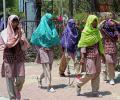
The global body added that national meteorological and hydrological departments in both countries are working closely with health and disaster management agencies to roll out heat health action plans.

The India meteorological department said another western disturbance is likely to bring storms and rain to the northern plains, including Delhi, over the next few days.

Delhi's primary weather station, the Safdarjung Observatory, registered a maximum temperature of 40.4 degrees Celsius, four notches higher than normal.

Please promise, especially those millions who trust you with their hard-earned money, never to let your voting preferences determine your actions on the markets. The most appalling and scary phenomenon was fund houses and brokerages going out on election yatras and writing copious reports promising more than 300 for the BJP. That was your wish as voters. Your investors are paying for it now, points out Shekhar Gupta.

The low-pressure area over the South Andaman Sea and adjoining southeast Bay of Bengal is very likely to move northwestwards and intensify into a depression by Saturday, the weather office said.

'We can save 70 patients out of 100, if they reach a hospital well within time.' 'The most crucial aspect is time.'

The British authorities declared a national emergency and for the first time issued a 'red extreme' heat warning for large parts of England.

Mumbai civic body took to Twitter to inform citizens about the do's and don'ts and asked them to "stay hydrated and safe".

The national capital battled weather conditions in the "red category" as the maximum temperature recorded at the Palam observatory was 46.1C,

The paper said 65,130 people were killed in 3,175 incidents of floods. Some 40,358 people died in 117 tropical cyclones, with 344.9 deaths per mortality event. There were 706 heat wave incidents that claimed the lives of 17,362 people, the paper said, adding there is a rise in the number of casualties because of this type of EWE.
